In practice
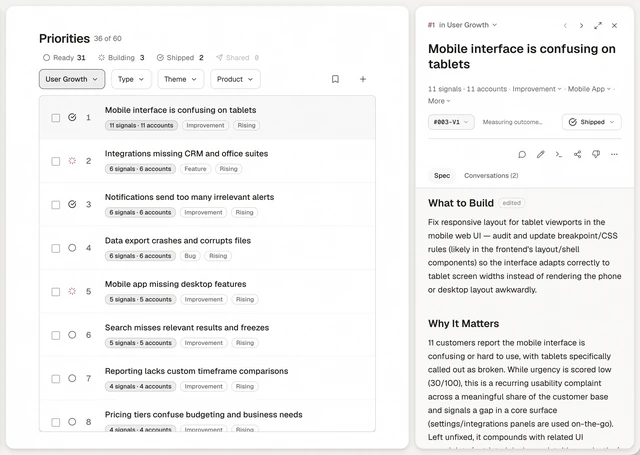
Before asking Claude Code to add team invites, you write one page: the problem, who asked, what to build, which files to touch, and what "done" looks like. The agent plans from it and you review against its done list.
The spec can be short and it can change. This isn't waterfall. What matters is that the intent exists, stays current and guides the work.
How to do it
GitHub's Spec Kit uses four steps:
- Specify: the what and the why, not the stack.
- Plan: the how: stack, constraints, architecture.
- Tasks: small, testable units of work.
- Implement: the agent builds task by task; you check against the spec.
Böckeler describes three levels: spec-first (written before the task), spec-anchored (kept and updated after), and spec-as-source (people edit only the spec; code is generated).
Common mistakes
- Writing a 20-page spec for a one-line bug. Böckeler called that "a sledgehammer to crack a nut."
- Treating a long prompt as a spec. A spec has a done list someone can check.
- Writing it once and letting it go stale while the code moves on.
What changes in AI-first products
A vague spec produces vague code at high speed, and with four agents you get four versions of it. In Annsa a spec has five sections: Problem, Evidence and direction, What to build, Files to touch, Done When. You, your agent or Ask writes it. Your agent writes it over MCP from the evidence Annsa keeps, you write it, or you ask Annsa's Ask for a codebase-aware spec that reads your connected repo.
See how Annsa does it: The spec →