In practice
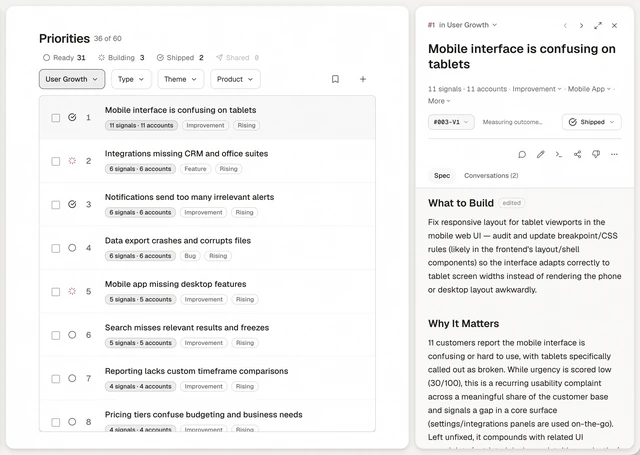
It usually covers the problem, who has it, strategic context, key decisions, edge cases, dependencies, success criteria, rollout and what is out of scope. It might be 1 page or 20.
A PRD isn't the same as a short product spec. A spec covers bounded work after the decision is clear. A PRD helps write down a larger decision before the work is settled.
Why it matters for founders and small teams
The out-of-scope section often does the most work. Clear exclusions stop a 2-week build from becoming a quarter.
What changes in AI-first products
A person may ask when a PRD is vague. A coding agent may make a reasonable guess and continue. Clear boundaries and done conditions now matter more than a long narrative.
See how Annsa does it: The spec →