In practice
A customer writes to support: "I can't find where to export last month's invoices." In the same week a prospect on a sales call asks whether you support accounting exports, and a survey answer says "reporting is a pain." That is three pieces of feedback about one problem, in three places, from three people.
Feedback is what customers say. Usage data is what they do. The two often disagree, and that gap is useful.
How to collect and use it
- Ask for it: in-product surveys, short interviews, a reply-to email after onboarding.
- Catch what arrives unasked: support tickets, sales and success calls, shared Slack channels, reviews.
- Keep each piece in the customer's own words, with who said it and when.
- Group pieces by the problem underneath, not by the fix the customer suggested.
- Count people and companies per problem, then decide what to build.
Common mistakes
- Treating each request as its own item, so one problem looks like ten small ones.
- Building the fix a customer named instead of the problem they described.
- Counting messages instead of people. One loud account can send twenty.
What changes in AI-first products
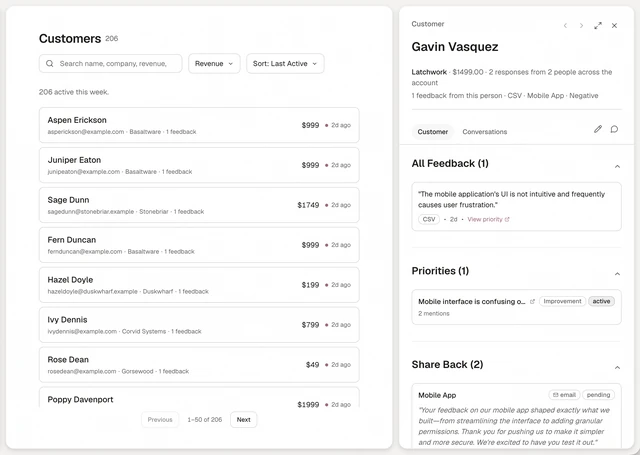
When Claude Code, Cursor, Codex and Grok can each ship a change in an afternoon, the slow part is knowing which change customers asked for. Feedback that lives in five tools never reaches the agent writing the code. Annsa collects it from Slack, Intercom, CSV, Google Sheets, Google Drive, transcripts, in-product surveys, manual entry and an API into one ranked list, with each quote kept verbatim. Your agents read that list over MCP. You make the call on what gets built.
See how Annsa does it: Customer feedback tool →